
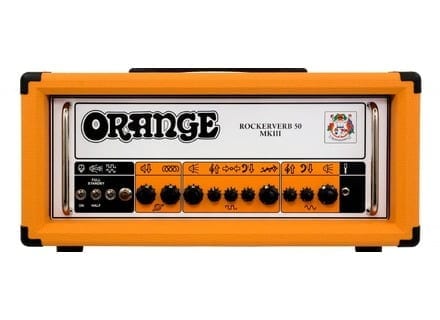
A Rockerverb That Lost Its Rockin’ Vibe
Over the weekend I had the pleasure of doing a quick service on an Orange Rockerverb MkIII. The amp is just coming up on two years old and gigged at least every week. The owner reported the amp was creating murky distortion and sounded so horrible it was no longer usable.
This amp sees a lot of lugging around and long gigs lasting three hours or more. He was leaving the amp on standby, switching it off, and then carting back to the wheels at the end of the gig.
As a first step, I advised that as soon as the gig is finished, totally switch the amp off and let the valves cool down. Valves wear with usage, but they don’t like vibrations or being moved around when hot. But what I discovered once I brought it to the workbench really surprised me.
When the Obvious Fix Fails
Preamp valves last longer than output valves, so my first thought was to run the amp’s EL34 pair on my valve testers, fully expecting to see valves that were worn. Surprisingly, they were in good condition and still matched. Of course, there was a very slight drop because of wear, but they had plenty of life in them.
Strangely, this wasn’t the problem zone.
Output valves get pushed the hardest and always wear out first… Or do they?
Digging Deeper
The Orange Rockerverb MkIII packs six preamp valves — four 12AX7 and two 12AT7. One 12AT7 drives the reverb (a hard task), and I was expecting a bit of a drop in its performance.
I tested the 12AT7s on an Avo Mk2 tester. And bingo, the reverb drive 12AT7 was totally worn out!
The other preamp valves weren’t far behind. Apart from one 12AX7 that was borderline, the whole set was shot. A perfect recipe for murky distortion. And not in a cool doom metal way, in a gross “Hey, is my amp broken?” way.
Ready to Rock Steady
So, the owner replaced all the preamp valves. We used three Tung-Sol 12AX7s, one Sovtek 12AX7WC to give some variation in the two channels in the V1 position, and two sturdy EH 12AT7s.
We tested the amp, and now this Orange Rockerverb 50 has a lovely full-bodied tone without sacrificing the highs, and the reverb is responsive again.
This was the first time I’d seen output valves outlive preamp valves.
The Takeaway
It just goes to show that keeping valve amps sounding their best is as much an art as it is a science. Dull tone and murky distortion aren’t necessarily a sign the output tubes are beat. On tone machines like the Rockerverb 50 MkIII that punish the preamp especially hard, the smallest valves can create the biggest problems if they aren’t regularly maintained. The same can prove true for quite a number of modern and high-gain amps.
Gigging musicians should stay mindful of heat, vibration, and standby habits if they want to get the most life out of their valves.
And that goes for output and preamp valves alike!
An Ounce of Prevention
Most valve amp problems stem from worn-out or failing valves. Keeping a full set of known good valves on hand to swap in and test can often preempt a trip to the tech and keep your amp ready to rock.
If you need valves for your amp, our handy Amp Finder can help you zero in on a set for your specific amp in no time.